
554 Pieces. No Two Alike.
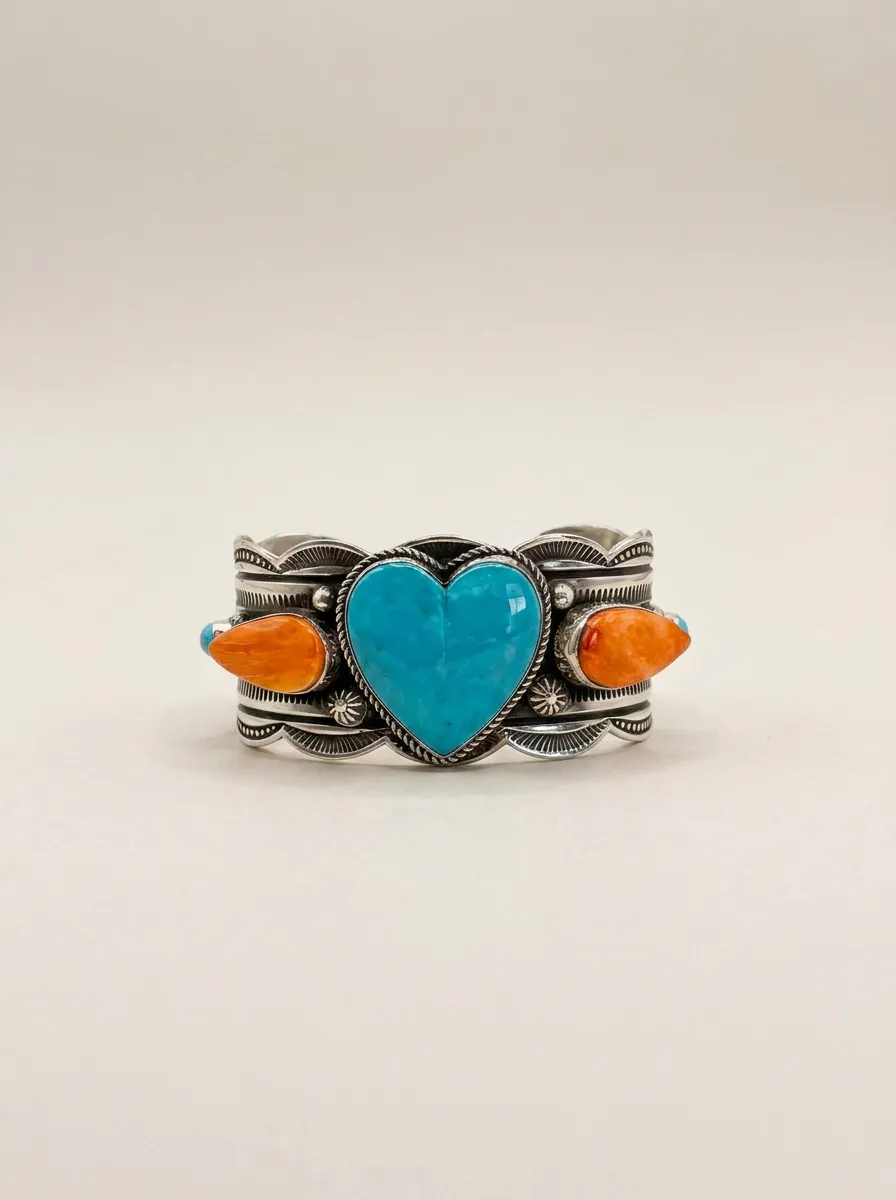
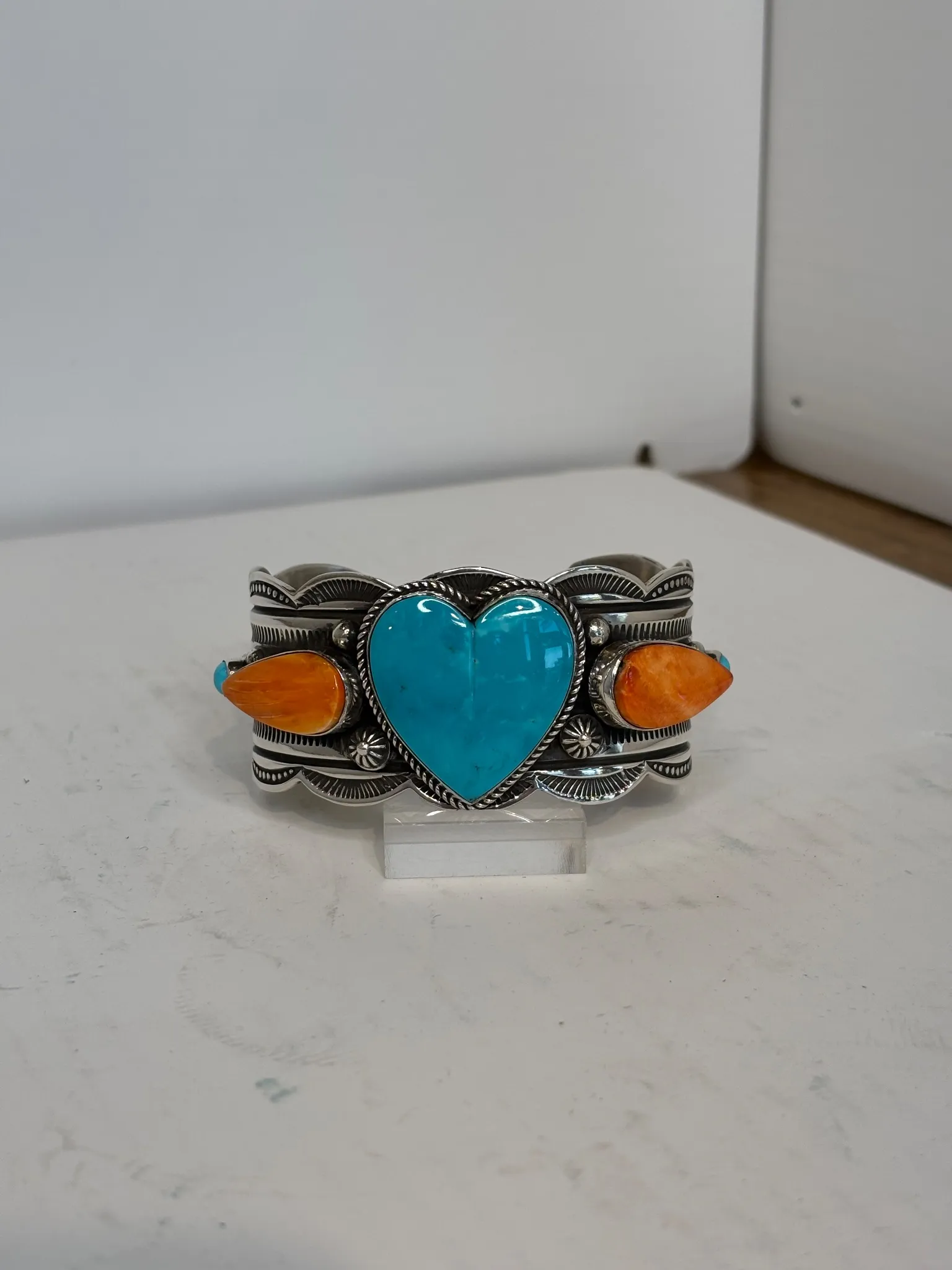
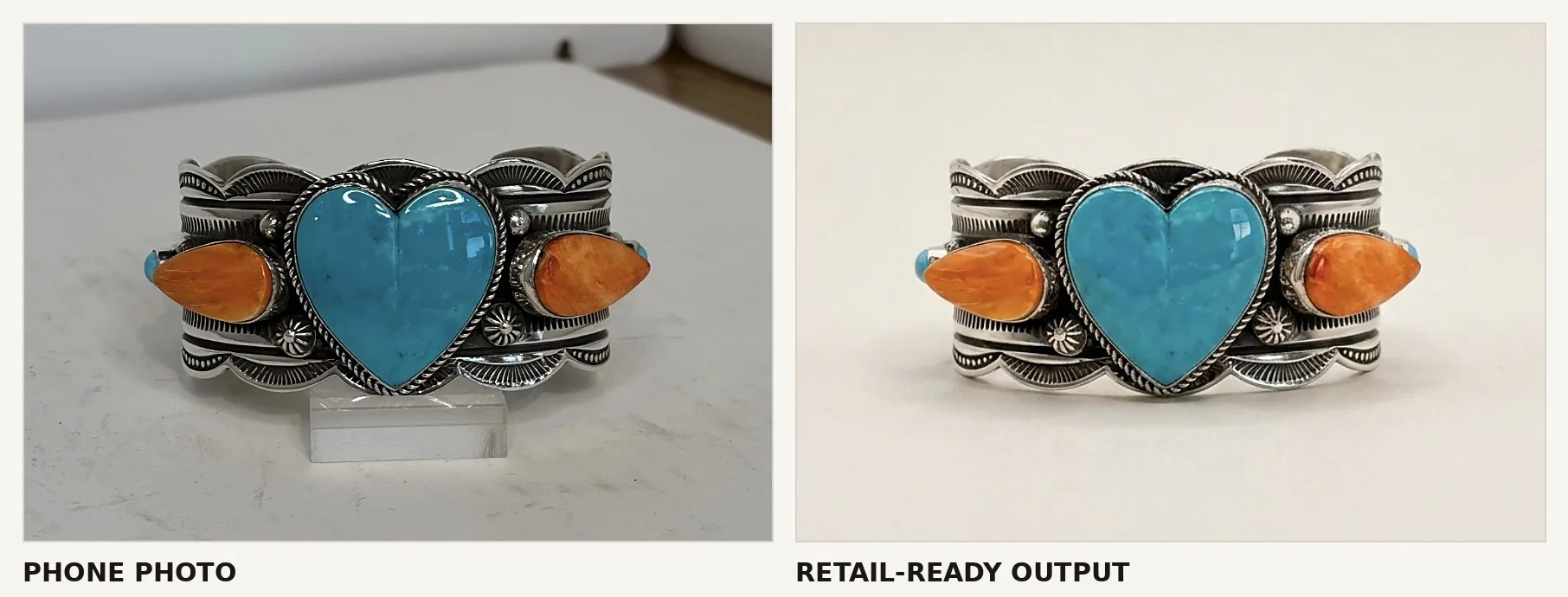
Photograph a piece on a phone. Have a retail-ready listing in minutes.
 PHONE PHOTO RETAIL-READY OUTPUT
AT A GLANCE
- 1,051 Pieces onboarded in six months
- 554 One of a kind, handled individually
- 5 Places to buy, one inventory
THE GOAL
Cowboys & Indians is a solid, well-run store with a jewelry case where almost nothing repeats. The store itself needed nothing. What needed to catch up was everything around it: the register, the website, and a way to list a catalog no off-the-shelf tool could handle. The goal was to build those to the standard of the store — every one-of-a-kind piece with its own photograph and its own description, the website and the register sharing one inventory count, and the store's own team able to add a piece from a phone.
WHAT WE BUILT
A full Shopify store with point of sale; the website, the Shop app, Facebook and Instagram all selling from one inventory count; a custom-built headless storefront — and a custom onboarding system that turns a phone photo into a retail-ready listing.
THE RESULT
1,051 pieces onboarded in six months, 554 of them one of a kind. Photograph to review-ready listing in minutes, where it had taken hours.
WHAT WE DO
We build e-commerce stores — with or without point of sale — and we get every channel talking to each other. Website, the Shop app, Facebook, Instagram, and the register, all running off one inventory count. Sell a piece at the counter and it comes off the website before the customer reaches the door.
We don't just put a store online. We build the foundation that makes it visible: a storefront a search engine can actually read, product pages that index as real content, and analytics the store owns. Ongoing search work is a separate service, and not every client needs it — but the foundation goes into every build, because a store nobody can find isn't finished.
Then we do the part most agencies quietly hope you'll handle yourself: getting your product into the store. Onboarding, photography, descriptions, SKUs, barcodes. That's our specialty, and it is usually the reason a project stalls.
When the problem doesn't fit the tools that already exist, we build the tool. Cowboys & Indians is where we did both.
Most e-commerce projects don't fail at the design stage. They fail at product 300.
THE STORE
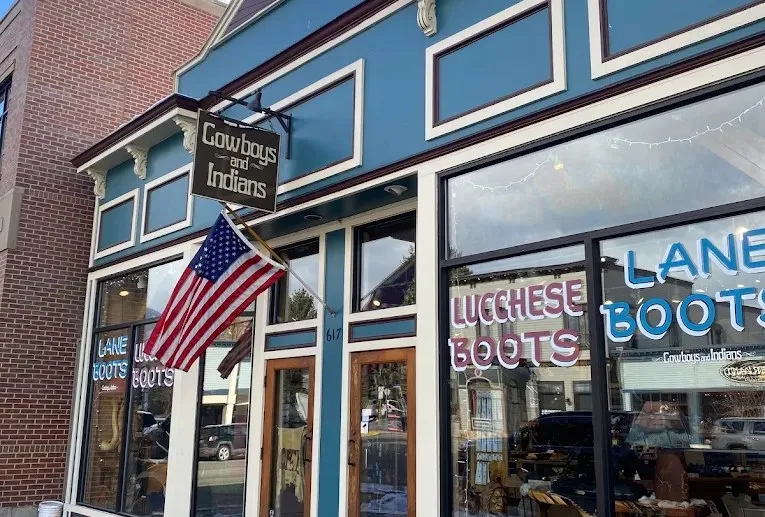
Cowboys & Indians has sold western wear on Lincoln Avenue in Steamboat Springs since the 1980s. Boots, hats, apparel, knives — and a jewelry case that stops people on their way past it.
Turquoise and sterling silver, bought direct from the silversmiths who make it. Cuffs, rings, pendants, bolo ties. Kingman turquoise, spiny oyster and coral set into silver that was cut and stamped by hand, piece by piece. Work that runs from a few hundred dollars to well over a thousand, and most of it exists exactly once.
A family business that built decades of reputation on the shop floor. There was a website, but it had stopped being a place they sold anything, and the counter still ran on an old cash register. The people who work there know every piece in the case: where it came from, who made it, which ones are special. That knowledge had never been written down, because it had never needed to be.
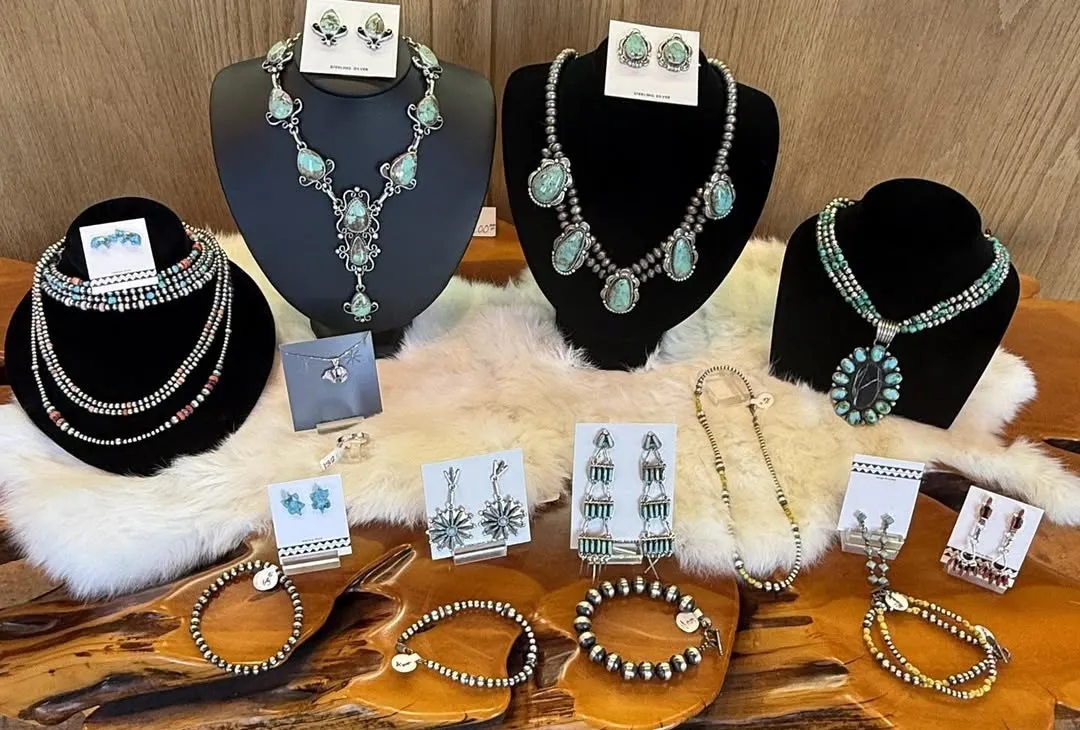
ONE OF A KIND
This is the kind of catalog most agencies would turn down. The reason they would turn it down is the reason it sells.
Most catalog work is a spreadsheet problem. A store carries four hundred products, each exists in quantity, one photograph and one description serve every unit. Import the sheet and you're done.
That approach breaks here, and understanding why is the whole engagement.
Of the 1,051 pieces we handled, 554 are one of a kind. Not one of a style — one of a kind. A silversmith cut and stamped that silver by hand and set that particular stone into it, and there is no second one anywhere on earth.
Which is, of course, the entire appeal. A customer who falls for a cuff isn't choosing between five of them in different finishes. They are looking at the only one that exists, and they know it. That is why this jewelry sells at the prices it sells at.
It is also why the catalog is close to impossible to list at a reasonable price. Every one of those pieces needs its own photograph, its own description, its own price, its own SKU, its own barcode. There is no bulk operation. There is no template. When it sells, that page is finished forever.
And until now, the only way to do it was three disconnected jobs stitched together by a person: send the piece out for photography, key the data in by hand, then copy and paste between tools to draft the copy. Hours per piece. At a thousand pieces, that math doesn't close. No sensible budget survives it.
A catalog like this is demanding for exactly the reason it is desirable.
It doesn't need a bigger team. It needs a different tool.
SO WE BUILT THE TOOL NEEDED
Here is the part we're proudest of, and it isn't the code.
The design brief was flow. A piece moves from the shelf to a finished listing without anyone waiting on anyone else, and the person holding it never has to think about the software.
It is a proprietary system built by Allred's Web Design and used by our team to streamline the onboarding process. It comes as part of the build, and current clients have the option to keep using it afterwards through an ongoing subscription.
The capture decides the quality, so it gets the care. Each piece is staged and shot in a lightbox — on a phone for most, on a camera where the detail earns it. Both go into the same flow. From that shot, the system builds the rest: it reads the image, works out what the product is, writes an accurate title and description, and creates the handle, SKU, category and tags in one pass.
At volume it runs as a line. One person stages and photographs. One audits what the system produced and sends it to Shopify. One barcodes the piece and returns it to the case. Nobody waits, and that is where the speed comes from. One person can run the whole flow on a smaller job — it was built so they could — but the line is how it earned its numbers.
What used to take hours across three tools now takes minutes, in one.
Two ways in
Image-first — for the one-of-a-kind pieces. Photograph, add a short working title, submit. The system reads the image, determines the product type, writes the title and description, and generates the handle, SKU, category and tags. Straight to the review queue.
Barcode-first — for anything that arrived with one. Scan the barcode and the system searches for manufacturer data. If it finds it, that data helps build the listing and the flow continues as normal. If it finds nothing, it falls back to the image-first path automatically. The person scanning never has to decide which mode they're in.
Hours per piece, down to minutes.
The photograph is the product
This is the part that mattered most and got the most attention.
Every image is polished on the way through — clean, consistent, color-accurate, retail-ready output. Not the raw phone photo with a filter on it.
That standard applies to every product, not only the rare ones. Online, the photograph is the product and the description is the salesperson. Boots, hats, knives, apparel — whatever it is, the customer cannot pick it up, turn it over, or ask the question they would have asked across the counter. The image and the words are all they get, and they decide on those two things alone.
For one-of-a-kind goods it is also unforgiving. A sold piece cannot be re-shot.
Turquoise is the hardest test there is. The distance between a clean Kingman blue and a green-cast stone is the distance between the piece the customer wanted and the piece they send back — and the same is true of the silver, where the whole value is in stamp work a bad photograph flattens into nothing. If a stone photographs wrong, you don't have a slightly imperfect listing. You have a wrong listing for a product that no longer exists to correct it.
So the images stay true to the stone. Color holds. Detail holds. The hand-work still reads as hand-work.
PHONE PHOTO
RETAIL-READY OUTPUT
Nothing publishes without a human
Everything the system creates lands in a review queue, and nothing reaches the store until a person has looked at it and approved it. At Cowboys & Indians that meant their own team reviewing their own listings, then the approved content going through to Shopify and out to the sales channels.
The person who knows the inventory stays in the loop, every time. The system does the labor; it doesn't get the last word.
Where the story goes in
Any piece can be sent to the owner for a final pass before it goes live. The system has already done the part that takes time — the photograph, the title, the description, the SKU. What it cannot know is the part that sells: which mine the stone came from, the year, the silversmith's name, why this piece is in the case at all. The owner adds that from home or from a desk, on the same screen, and clicks approve.
No spreadsheet, no email thread, no retyping. A listing that began as a phone photo ends with the one thing a mass-produced catalog can never carry — a true story, written by the person who knows it. That is the difference between a product page and a premium one. It is optional on every piece, and for a busy owner it is the way to check, brand and approve a batch in one sitting.
The system does the typing. The store still does the deciding.
The system writes the listing. The owner writes the story.
THE STORE ITSELF
Selling in five places is the easy part. Making five places agree is the build.
Onboarding was only part of the engagement. Before a single piece could be listed, Cowboys & Indians needed somewhere for those pieces to live, a register that agreed with the website, and a storefront a search engine could actually read.
Five places to buy, one inventory count
The website, the Shop app, Facebook and Instagram all sell from the same Shopify catalog and the same stock number, and so does the register on Lincoln Avenue. Sell a cuff at the counter and it comes off the website before the customer reaches the door.
For a store where most pieces exist exactly once, that is not a convenience — it is the whole thing. Two channels with separate counts means selling the same one-of-a-kind necklace twice, and then telephoning somebody to explain. There is no sync running between systems here, nothing to fall behind overnight, because there is only one number.
Point of sale, live and in daily use
Live in store on March 3, 2026 and in continuous daily use since — hardware configured on site, staff accounts and permissions set up, and their team trained on it in person. It replaced the cash register that had been on the counter until then.
A storefront built to be found
A custom headless storefront reading inventory live from Shopify, with product pages rendered server-side so Google indexes real content instead of an empty shell — which is what a search engine sees when a store is built the quick way. First-party analytics underneath it, so the store owns its own numbers rather than renting a view of them.
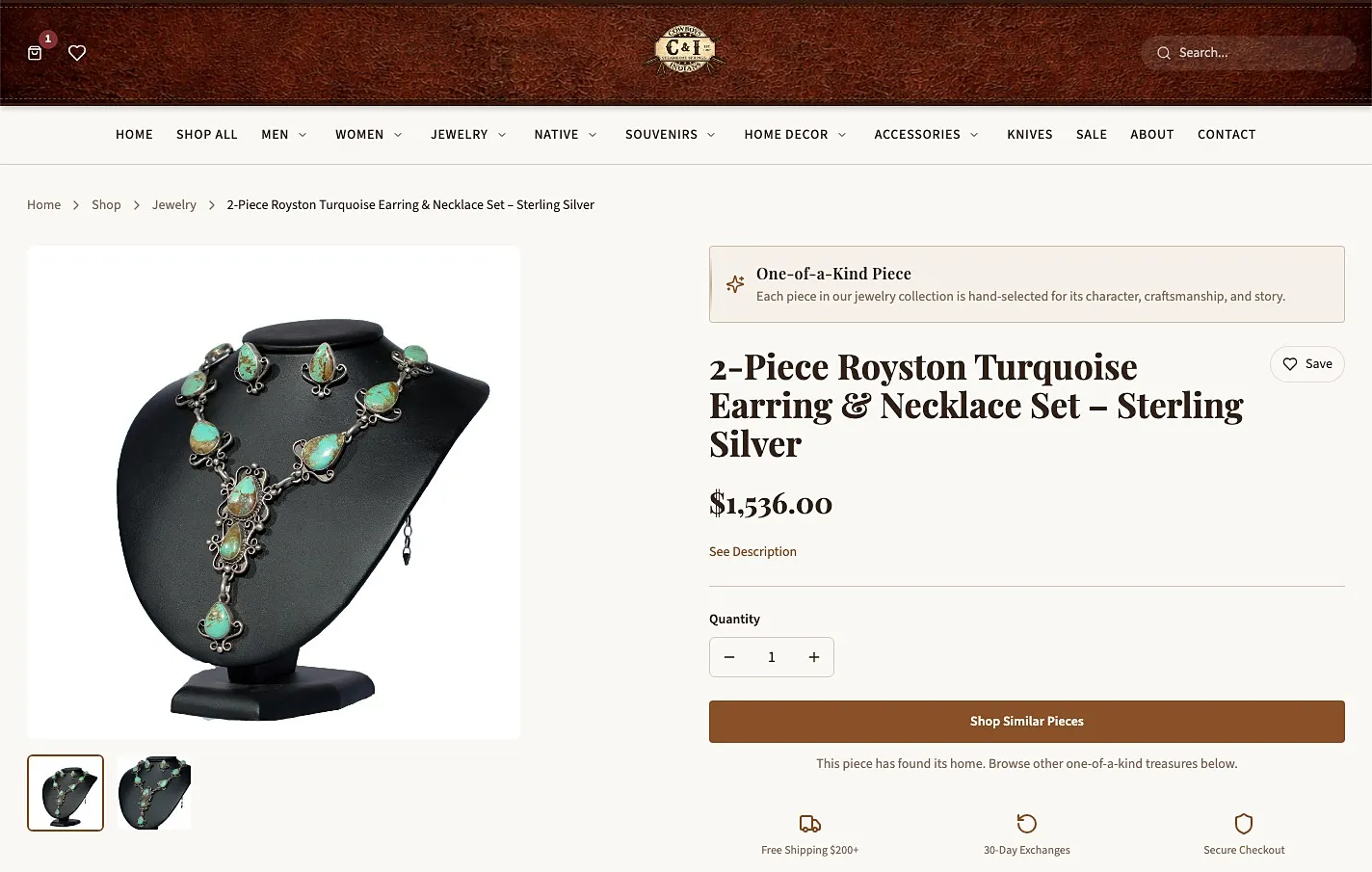
And the physical side
Shopify configured end to end for payments, tax and shipping. Barcodes generated, printed on site and applied to the pieces that arrived without them, with the label printer set up and staff walked through the workflow. A catalog nobody can scan is a catalog nobody can sell at a counter.
WHERE IT LANDED
| Measure | Result |
|---|---|
| Pieces onboarded in six months | 1,051 |
| One of a kind, handled individually | 554 |
| Photograph to review-ready listing | minutes |
| Previous workflow | hours per piece |
The part that doesn't fit in a table: by the end, their own team was adding products without us. That happened because they were in it from the first day — trained through the build rather than handed a manual at the end of it. Their staff learned the workflow on their own inventory, alongside our team, over six months. That is the outcome we want on every engagement, and it is why we train as we go rather than at the finish.
They don't need us to add products any more. That's the win.
WHAT THIS MEANS FOR YOUR STORE
If you sell things that don't fit a spreadsheet — vintage, handmade, one-of-a-kind, consignment, anything where each item is its own small problem — the usual advice is to cut the catalog down until the tools can cope.
We think that's backwards. Build the tool that fits the inventory.
And this isn't only for one-of-a-kind goods. It applies to any listing that needs a studio-grade photograph, a title and description polished for online, or the history and the story behind it told the way the owner would tell it — whether the piece was made and produced individually, or it's a stocked product sitting behind a manufacturer photo that should be reshot and done properly.
We build e-commerce stores with point of sale, sync your channels to one inventory count, and get your product onboarded and barcoded — and when your catalog doesn't fit what's on the shelf, we build what it needs.
Tell us what you sell and what's making it hard.
We'll tell you honestly whether we're the right people for it.
Start a project